
The commerce ministry and industry bodies are in favour of FDI in the education sector. However, the HRD ministry is opposed to it.
As foreign fund flows have lifted the rupee to record highs against the dollar, the commerce ministry has started telling exporters to prepare for the Indian currency rising further to 38 against the dollar by December. The strong rupee is already hurting India's exporters, with companies cutting jobs and scaling back expansions. A further appreciation may have even worse consequences for sectors like textile, infotech and automobile.
Questions over proposed changes in land use are piling up, even as the commerce ministry and Maharashtra government are rushing to give in-principle approvals and conditional no-objection certificates to special economic zone developers.
The annual Sino-India border trade at Nathu La, which was to be reopened for the traders of the two countries on Thursday, has been postponed following the Union Commerce ministry's communique to the Sikkim government authorities, official sources said. Meanwhile, the Chinese authorities have cited the occurrence of landslides in several areas in the Tibet Autonomous Region disrupting the movement of people and goods as the reason behind postponement.

The wholesale inflation rose to a 13-month high of 1.26 per cent in April fuelled by rising prices of food articles, especially vegetables, amid expectations of RBI holding interest rates in the policy review next month. The wholesale price index (WPI) based inflation has been rising for two months in a row.

The government on Thursday banned exports of non-basmati white rice to boost domestic supply and keep retail prices under check during the upcoming festive season. There would be no change in export policy of par-boiled non-basmati rice and basmati rice, which forms the bulk of exports, the food ministry said in a statement. Non-basmati white rice constitutes about 25 per cent of total rice exported from the country.
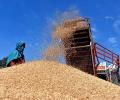
A decision to tap the 30 countries for exporting wheat was taken at a meeting of the commerce ministry on Thursday.
Move could delay FDI liberalisation in the sector.
Upset over objections raised by the government on their Rs 21-crore (Rs 210 million) proposal to launch a global Basmati promotion campaign featuring Bollywood star Shahrukh Khan, rice exporters will present their case before the commerce ministry.

The finance minister continues to be backed by the same policy team in charting out the broad strategy as in the few earlier Budgets.
Defending its policy of liberalising foreign direct investment in retail, the government confirmed that it would go ahead with its plan to expand its ambit.

Nobel laureate Prof Mohammad Yunus, the designated head of Bangladesh's interim government, on Wednesday fervently appealed everybody 'to stay calm' and 'refrain from all kinds of violence' as the country witnessed a major reshuffle in the security establishment after the ouster of the Sheikh Hasina government.

The decision came a day after the resignation of Telugu Desam Party's Ashok Gajapathi Raju was accepted by President Ram Nath Kovind

Even as the government today gave Saurabh Chandra, secretary, department of industrial policy and promotion (DIPP), the additional charge of secretary, Department of Commerce, Dinesh Kumar Mittal has emerged as the front runner for the post.

Indian Railways has managed to improve its freight volumes each year since the pandemic. However, its inability to add new industries and goods will pose a challenge for the national transporter in the wake of it setting an ambitious target of 45 per cent share in the national logistics by 2030. According to officials, the ministry of railways achieved 114 million tonnes (mt) of miscellaneous goods (classified as balance and other goods) in 2023-24.

The wholesale price index (WPI)-based inflation rose in December at 0.73 per cent mainly due to a sharp rise in food prices. The WPI inflation was in the negative zone from April to October and had turned positive in November at 0.26 per cent.
A policy was introduced on 1 January 2000 to set up special economic zones in India to provide an internationally competitive environment for exports.
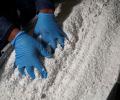
The central government is expected to complete the auction of the 5.9-million tonne (mt) lithium reserves discovered in the Reasi district of the northern Union Territory (UT) of Jammu & Kashmir (J&K) by the end of this calendar year, Union Mines Secretary Vivek Bharadwaj said on the sidelines of the launch of the Federation of Indian Chambers of Commerce and Industry (Ficci) report on 'New-Age Energy Minerals' on Tuesday. "Auction will be over by the end of this year," said Bharadwaj, adding, "We have already recommended a transaction advisor to the J&K government for the auction of lithium reserves." However, the exact timeline for an auction will be decided by J&K authorities, Union mines minister Pralhad Joshi said in Parliament last month.
Wholesale inflation in the country rose marginally to 0.53 per cent in March compared to 0.20 per cent in the preceding month due to increase in prices of vegetables, potato, onion and crude oil. The Wholesale Price Index (WPI)-based inflation was in the negative zone from April to October and had turned positive in November at 0.26 per cent. The inflation in March 2023 was 1.41 per cent.
Union commerce ministry will make efforts to remove hurdles at the Indo-Pakistan border in the way of tea trade, a top government official said in Coonoor on Saturday.

After 100% FDI, DIPP has put a condition an e-commerce entity will not be permitted more than 25% of sales through its marketplace from one vendor or their group companies

Floats discussion paper for stakeholders' feedback with a deadline of January 28.

Top government officials in New Delhi have started discussions with stakeholders ranging from shipping and container companies to export promotion councils to understand the impact of the Iran-Israel tensions and plan ahead. Inter-ministerial talks are also being lined up amid the crisis situation in West Asia, sources confirmed. While the crude flows are not directly under any threat, elevated oil prices remain a concern, according to officials.

The growth in world trade is expected to slow down to one per cent in 2023, due to global uncertainties, according to a WTO forecast. The World Trade Organization (WTO) has also projected a growth of 3.5 per cent in global trade this year, as against the April estimate of 3 per cent. World trade is expected to lose momentum in the second half of 2022 and remain subdued in 2023, as multiple shocks weigh on the global economy, the multi-lateral body has said in a statement.

Gold imports, which have a bearing on the current account deficit, declined 47.42 per cent to $9.28 billion during April-October due to fall in demand in the wake of the COVID-19 pandemic, according to data from the commerce ministry. Imports of the yellow metal stood at $17.64 billion in the corresponding period of 2019-20. The imports, however, recorded a growth of about 36 per cent in October.
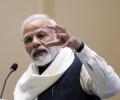
Starting today, Modi and top officials in the Prime Minister's Office will be briefed by various central ministries and departments on their plans as well as agenda for the next five years. They will also apprise the PMO of the work they have done so far in realising the agenda of government's second term in office.

The chamber has sought clarity from government to remove uncertainty among businesses
As part of efforts to boost exports to the Commonwealth of Independent States, the government is likely to unveil a Focus-CIS programme in the forthcoming Exim Policy.\n\n\n\n

The big boys of India's traditional retail have finally come together to fight the onslaught of their online counterparts.

Thrust on infrastructure and capital expenditure is expected to continue in the Union Budget for FY25.

India and the US have signed an agreement to promote innovation through increasing cooperation among startups, address regulatory hurdles and share best practices on fundraising by entrepreneurs, an official statement said on Wednesday. The memorandum of understanding (MoU) on enhancing innovation ecosystems through an innovation handshake under the framework of India-US Commercial Dialogue was signed on November 14 in San Francisco. Commerce and Industry Minister Piyush Goyal is in San Francisco.
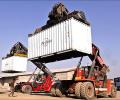
Commerce ministry monitoring remedial measures to promote exports in key markets.
.jpg)
Government seeks stakeholders' comments by Jan 30 on discussion paper.

Anand Sharma, Union Commerce Minister, crossed over to Pakistan early Monday morning with a large delegation comprising of officials of his ministry, members of the trade chambers and journalists to launch India show in Lahore where goods from India would be displayed for the visitors who are keen to buy them.

India granted 1.03 lakh patents in financial year 2023-24, Controller General of Patents, Designs and Trademarks Unnat Pandit said on Thursday, as he assured that there will be "no delay" in the Intellectual Property Office as it prioritises timely clearance of applications. Addressing an Assocham event here, he shared that 40 per cent of the applications were disposed of within 30 months of the request for examination. "We are going to have no delay in the IP office, that's the motive with which we have .. that IP should be granted and under Chapter 8 of the Act it should also be utilised by the applicant ... that will generate the economic value of IP," Pandit said.

In the national capital, onion prices were ruling at around Rs 40 per kilogram.

The commerce ministry has sought a review of foreign direct investment policy in the pharmaceutical sector, in the light of recent takeovers of domestic companies by multinationals.
